
A multi-sided MVP connecting restaurants and diners — built solo as the only designer, from blank canvas to shipped product in 3 months.
Role:
Solo Product Designer
Team:
Solo (joined with only branding in place)
Timeline:
3 months
Platforms:
Mobile app, Admin panel
Status:
Live
Context
Chama is a restaurant marketplace launched in Georgia, built to connect restaurants with diners through a single ecosystem. When I joined, the only thing that existed was the brand. No product, no system, no flows, just a logo and a vision.
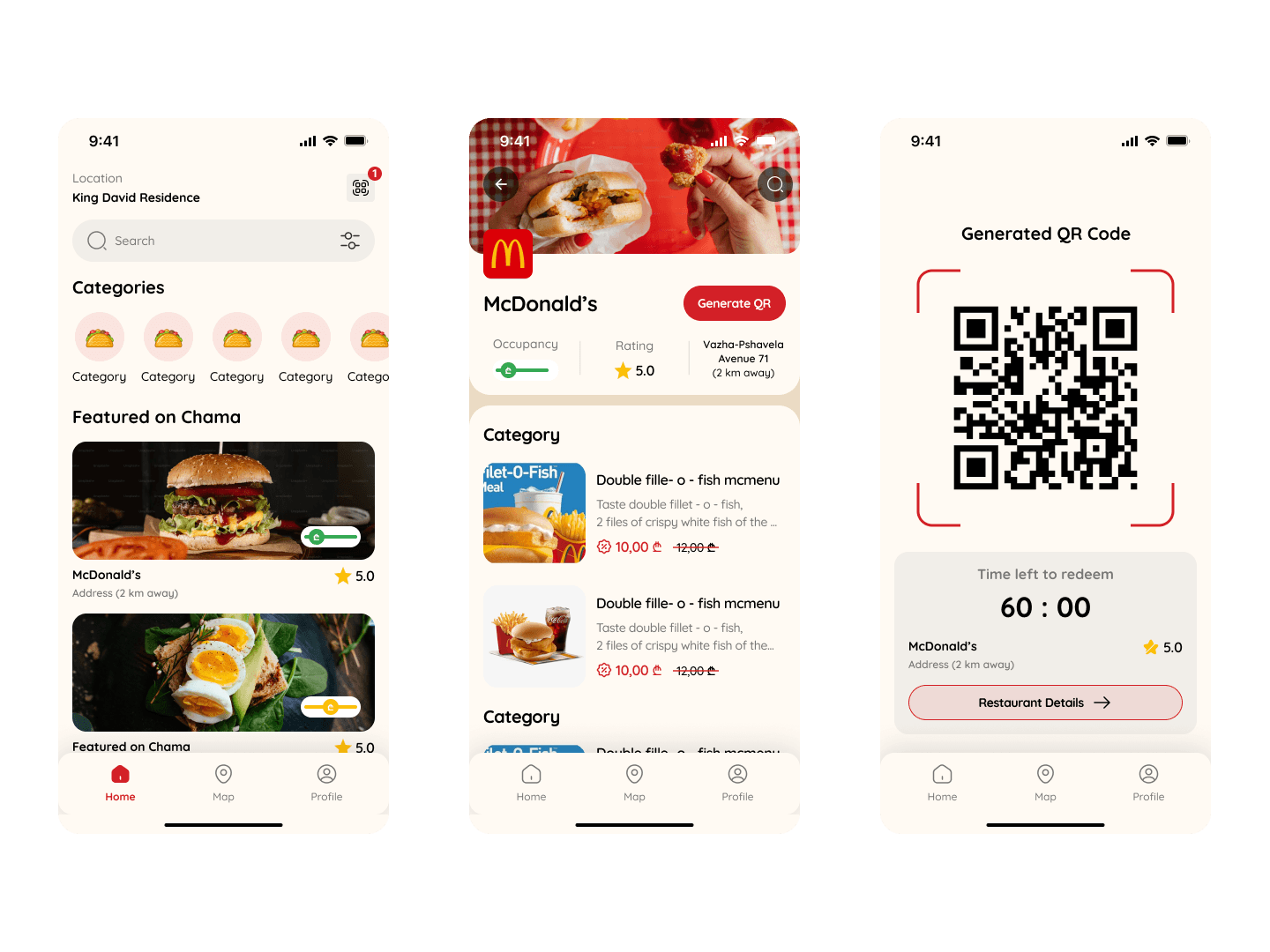
As the only designer, I owned every pixel: the mobile app for diners, the admin panel for restaurants, and the design system that held them both together. Three months from blank file to shipped MVP.
The Challenge
Multi-sided marketplaces are deceptively hard. You're not designing one product — you're designing two or three that have to feel like one.
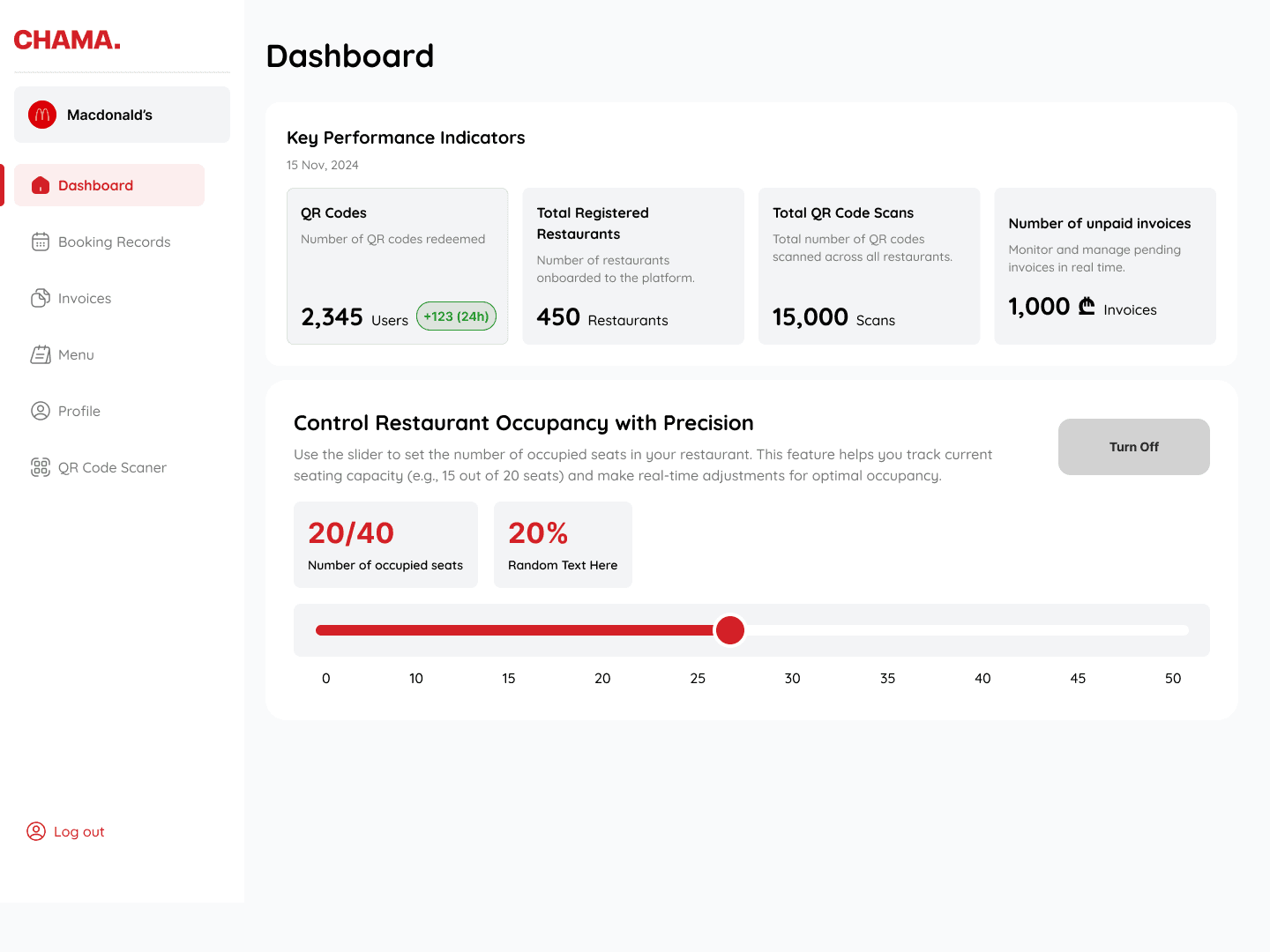
For diners, the experience had to be clean, fast, and mobile-first; browsing and choosing a restaurant should feel effortless. For restaurants, the admin panel had to be powerful enough to manage menus, orders, and operations without designer hand-holding. And underneath both, I needed a design system scalable enough that future features could ship without starting over each time. All of it had to be delivered fast enough to hit the launch window, with no precedent inside the company to build on.
My Approach
1. Two products, one system. The diner app and the restaurant admin panel have completely different user mindsets, casual browsing versus operational work. But they had to share a design system. I built tokens and components that could flex between both contexts: relaxed and visual on the diner side, dense and functional on the admin side, but still recognizably the same product family.
2. Mobile-first for the diner side. Diners use phones. Always. The diner experience was designed mobile-first from the first screen, restaurant cards, filters, menus, and order flows, all built for thumb navigation before anything else
.
3. Operational clarity for restaurants. Restaurant staff aren't designers. The admin panel had to work for someone in a busy kitchen who needs to update a menu in 20 seconds. I prioritized reduced cognitive load: clear hierarchies, obvious primary actions, and minimum clicks for the most frequent tasks.
4. Shipping over polishing. With 3 months to launch, I made deliberate scope calls: what had to be perfect at launch, what could ship "good enough" and improve later, and what could wait for v2. This is the part of the job most case studies hide, but it's what actually gets products out the door.
What I Shipped
Diner mobile app – discovery, restaurant pages, menus, ordering, account
Restaurant admin panel – menu management, order flow, settings, operations
Design system from scratch – tokens, components, patterns covering both surfaces
Launch-ready handoff – production-grade Figma files that developers could ship directly
Outcome
Chama shipped its MVP and launched publicly. The product is still live and operating in Georgia today.
Giorgi created and implemented a design system and designed and improved countless new features. He's an extremely nice guy and an immensely talented designer, and we're still enjoying the fruits of his labor years later.
Giorgi Tamazashvili, Co-Founder at Chama
What I took away: Designing two sides of a marketplace solo taught me how to make scope decisions with no safety net. Every "let's add this" had a cost, and learning to say "v2" was as important as knowing how to design well.